What is branding? Ask ten people and you will get ten answers, a logo, a color palette, a vibe. Here is the answer that actually helps you run a small business: branding is the sum of how people feel when they think about your company. Everything else (the logo, the fonts, the website) is a tool for shaping that feeling on purpose.
We are a branding and digital agency in Naples, Florida, and we have watched excellent local businesses lose work to weaker competitors for one reason, the weaker competitor looked like the safer choice. This guide covers what branding really includes, why it matters more for small businesses than for big ones, and how to start right without a big budget.
Branding is not your logo
Let us clear the biggest misconception first. Your logo is not your brand. Neither are your fonts or your website’s color scheme. Those are pieces of visual identity: the part of a brand you can see.
Your brand is bigger: it is how customers perceive your entire business, whether you control that perception or not. The way your invoices look. How fast you reply to a quote request. Whether your Instagram matches your storefront. People add all of it up, and the sum is your brand, with or without your input.
That is the real choice a small business faces. Not “should we do branding” but “do we shape it on purpose, or let it happen by accident?”
What is branding, in practical terms?
Branding is the deliberate work of deciding how your business should look, sound and feel, then applying it consistently everywhere a customer meets you. It is the emotional shortcut that turns strangers into buyers and buyers into repeat customers.
Consistency is where the money is. Businesses that present their brand consistently across every channel report meaningfully higher revenue than those that do not: brand consistency studies put the lift at up to 20–23%. Not because logos are magic, but because consistency reads as competence, and people buy from businesses that look like they have their act together.
Why it matters more for a small business
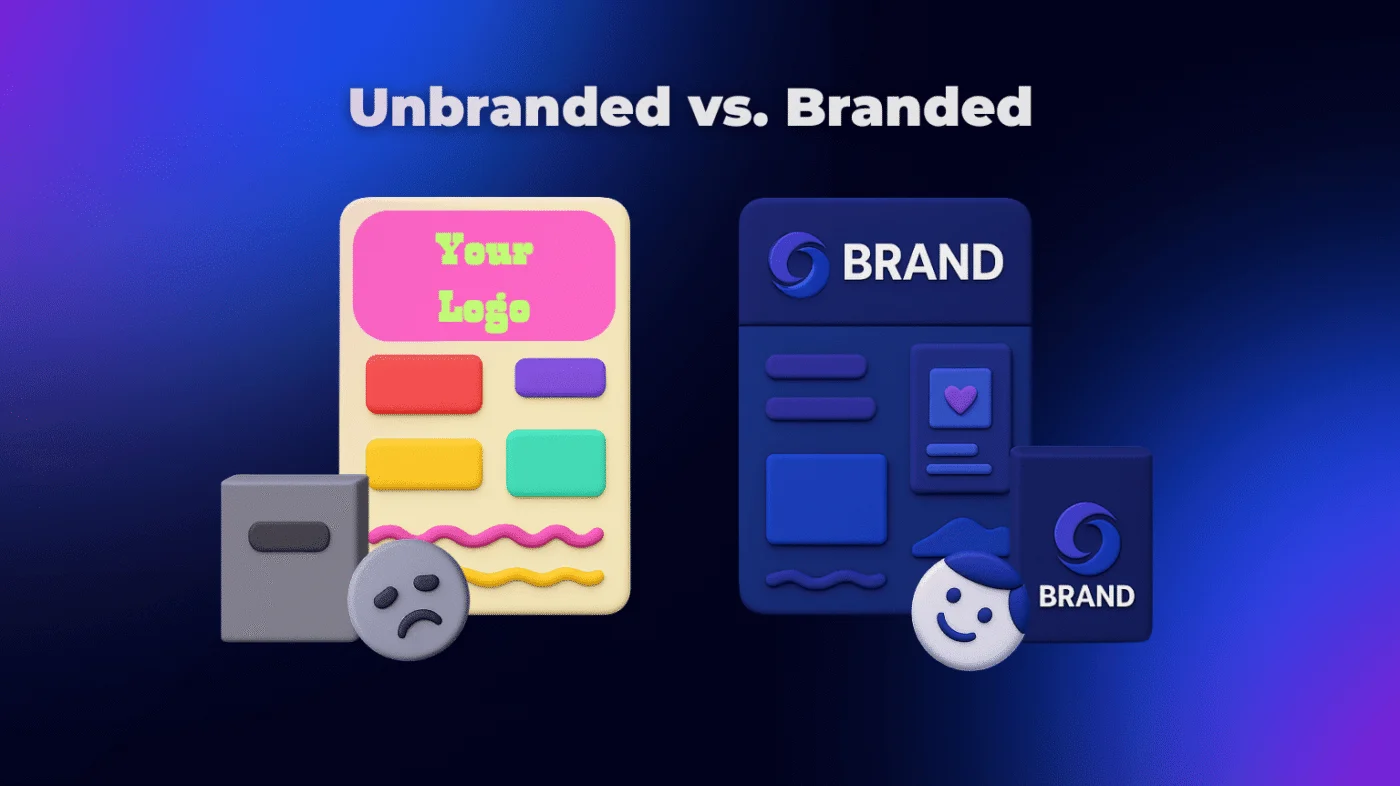
Big brands can survive being generic: they buy attention with volume. A small business in a market like Southwest Florida cannot. When someone in Naples searches for a contractor, a realtor or a med spa, they see a page of similar names and pick the one that feels most credible in about five seconds.
Three things branding does in that five-second window:
- Trust. Credibility is judged visually and emotionally before anyone reads a word. A coherent identity signals an organized business.
- Memory. In a crowded local market, branding is the difference between remembered and forgotten when the need actually arises.
- Price. Strong brands defend their prices. Unbranded businesses end up competing on discounts, because price is the only difference a customer can see.
This is not an afterthought, either. The U.S. Small Business Administration puts brand identity among the first decisions of launching a business, before the marketing spend, not after it.
What branding actually includes
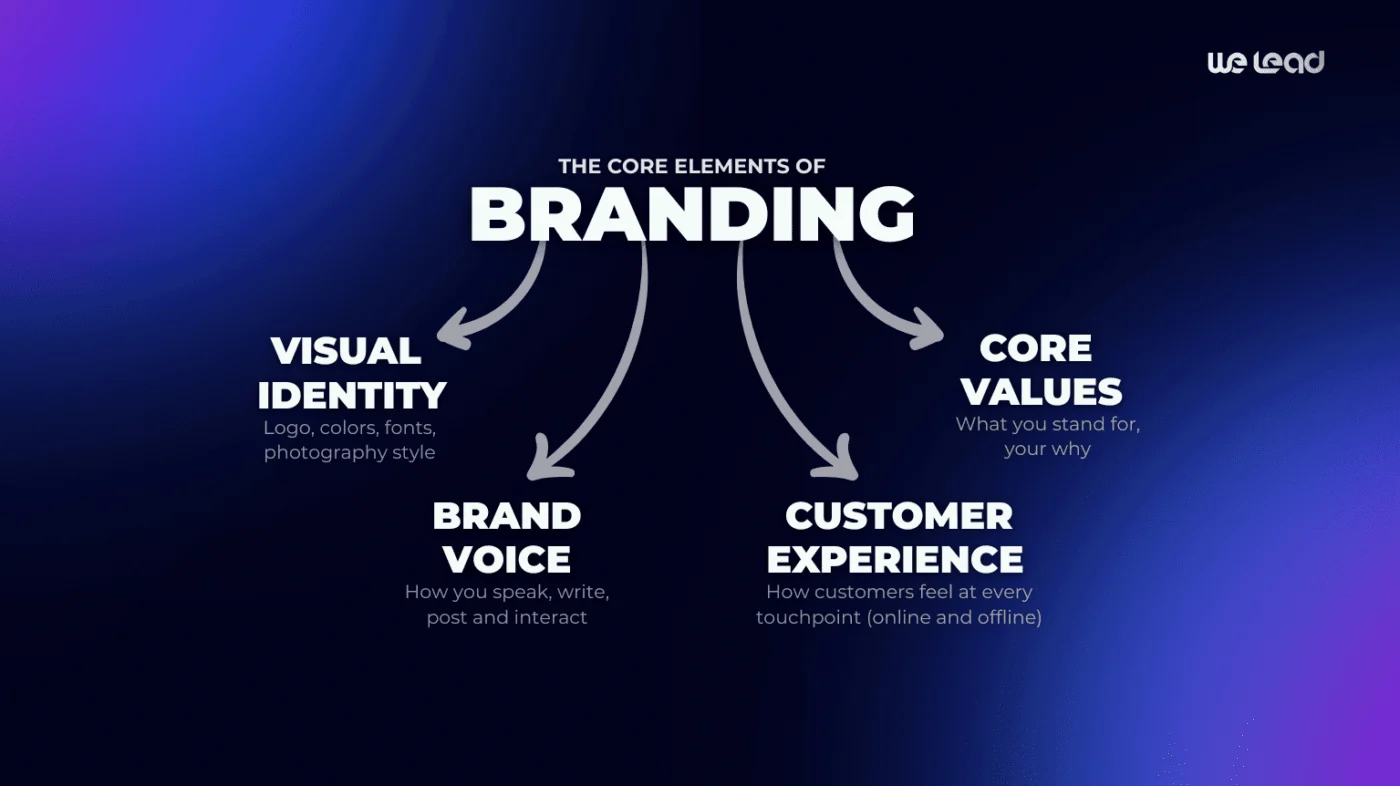
- Visual identity. Logo, colors, typography, photography style. This is the graphic design layer, the one most people mean when they say “branding.”
- Brand voice. How you write and speak: on your website, in emails, in captions. A luxury builder and a beach café should not sound the same.
- Core values. What you stand for and why you exist beyond the invoice. This is what customers repeat when they recommend you.
- Customer experience. How it feels to deal with you at every touchpoint, and your website above all, because for most customers it is the first one.
How to start branding right, without a big budget
- Answer three questions in writing. Who is this business for? What do they actually get? Why you and not the next name on the list? Every visual decision follows from these.
- Pick one visual direction and commit. One logo, two typefaces, a small color palette. Restraint looks expensive; variety looks chaotic.
- Fix your touchpoints in order of traffic. Website first, then Google Business Profile, then the social profile your customers actually use. Do not touch the business cards until those three match.
- Write down five rules. Logo placement, colors, one line about tone. A one-page brand guide beats a beautiful one nobody opens.
- Stop redesigning. Consistency compounds. A decent identity applied ruthlessly for two years outperforms a brilliant one that changes every six months.
And if you would rather have it done properly in weeks instead of learning it over months, that is literally our job. See our branding services in Naples.
What this looks like in practice
When Naples artist Margreet Schaap came to us for a website, the project quickly became an identity: her own handwritten signature as the logo, a restrained system around expressive work, and a portfolio she can send to galleries. Read the full branding case study: including what the client said about it afterwards.
Frequently asked questions
Not sure where your brand stands? Get a free audit: we will tell you what is working, what is not, and what to fix first. No obligations.